

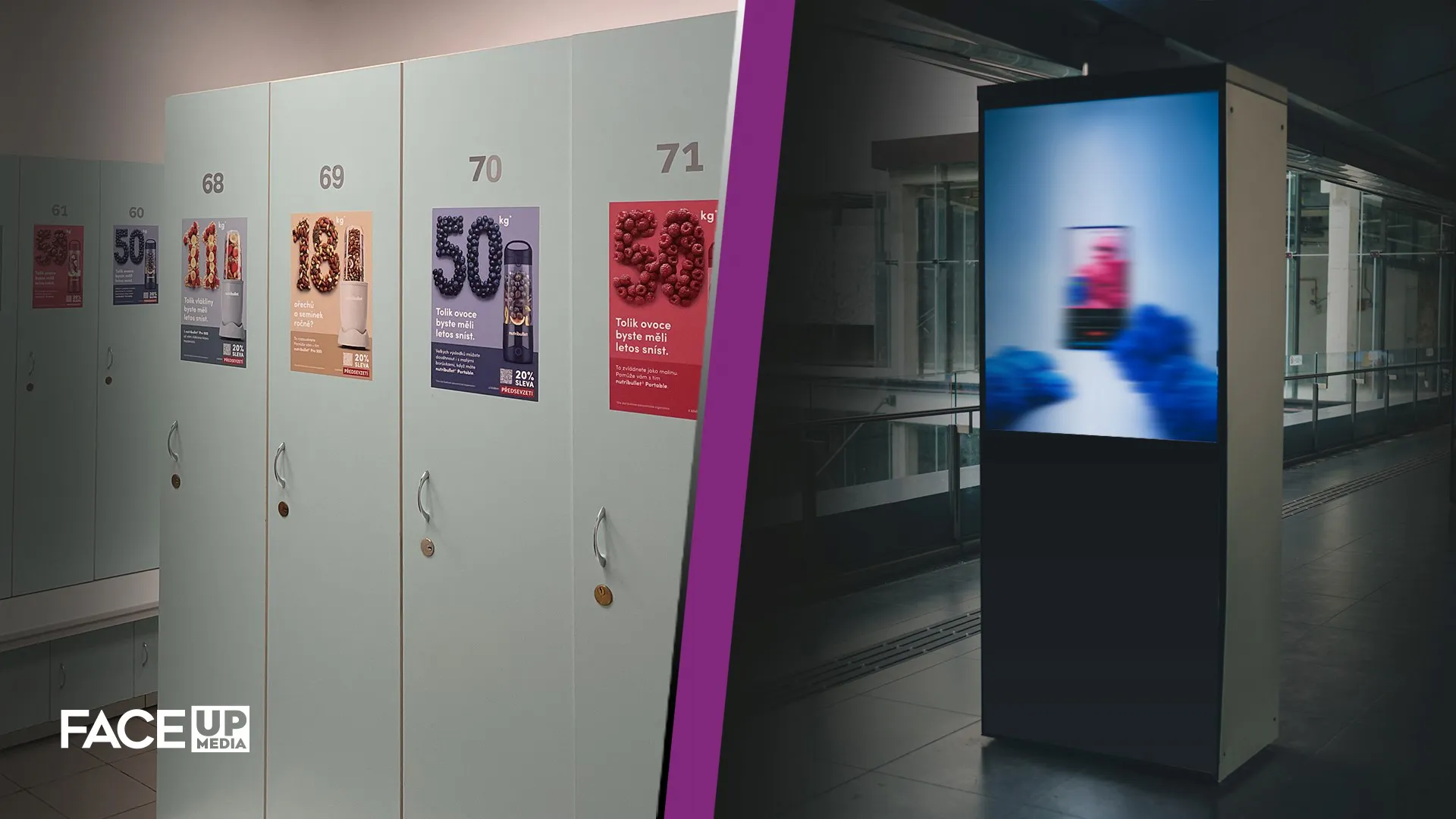
Vizuální reklama nás obklopuje doslova na každém kroku. Jednou jde o velký tištěný plakát na fasádě budovy, jindy o digitální panel s animací nebo videem. Na první pohled se může zdát, že pohyblivá reklama má automaticky navrch – je dynamická, barevná a působí moderně. Realita ale není tak černobílá. Statické i pohyblivé formáty totiž pracují s lidským vnímáním odlišným způsobem. Každý formát má své silné stránky a dokáže být mimořádně účinný právě v situacích, kde ten druhý naráží na své limity.
Pohyb přitahuje pozornost, ale ne vždy zanechá stopu
Pohyb je pro lidský mozek silným signálem, který si uchoval význam po celou evoluci. Právě proto digitální reklamní panel dokáže pozornost kolemjdoucích upoutat téměř okamžitě – často však jen na velmi krátký okamžik.
Výhody pohyblivé reklamy:
- rychlé upoutání zraku,
- možnost vizuálně vyprávět příběh,
- přenos většího množství informací na omezeném prostoru,
- snadná a okamžitá výměna sdělení.
Omezení pohyblivé reklamy:
- přehlcenost – nadměrný pohyb může vést k ignorování obsahu,
- krátký čas vnímání – člověk nestihne vše přečíst nebo pochopit,
- závislost na technice – poruchy, špatný jas nebo odlesky,
- vyšší pořizovací i provozní náklady.
Pohyblivá reklama velmi dobře funguje u dynamických sdělení, časově omezených akcí, video vizuálů nebo u značek, které pracují s emocemi. Pokud má však člověk informaci skutečně zpracovat, delší a soustředěná pozornost už zaručená není.
Statický plakát: méně efektní, ale silný pro zapamatování
Statické reklamní plochy fungují odlišným způsobem než digitální formáty. Nezáří, nehýbou se a nesnaží se o okamžité přitáhnutí pozornosti. Díky tomu mohou být ale velmi účinné v situacích, kdy je cílem zapamatování nebo porozumění sdělení.
Výhody statického plakátu:
- dlouhá kontaktní doba (čekárny, fitness centra, školy, restaurace…)
- možnost postupného přečtení a pochopení obsahu,
- vizuální jednoduchost a přehledná kompozice,
- působení bez rušivých efektů,
- nižší náklady a dobrý poměr ceny k efektu.
Z poznatků psychologie vyplývá, že statická sdělení mají tendenci zůstávat v paměti déle, lidé u nich častěji lépe rozpoznávají značku a zároveň si ji spojují s konkrétním prostředím, ve kterém se pravidelně pohybují.
Statický plakát tak může fungovat jako vizuální kotva – člověk jej vidí opakovaně a i bez vědomé pozornosti si jeho podobu postupně ukládá. Na rozdíl od animací, které často upoutají okamžitou pozornost, ale nezůstanou.
Kdy pohyblivá reklama opravdu dává smysl?
- U krátkých kampaní s okamžitou akcí (sleva, event, upozornění).
- V prostředí s rychlým pohybem lidí (dopravní uzly, nádraží, letiště).
- U značek, které pracují s emocemi, příběhem nebo video obsahem.
- V případě, že je potřeba kombinovat více sdělení na jednom místě.
Kdy statická reklama poráží animace?
- V místech, kde lidé tráví delší čas (fitness, čekárny, školy, kavárny).
- Když je klíčové zapamatování sdělení, nikoliv pouze jeho zachycení.
- U jednoduchých, jasných vizuálů a dlouhodobých brandových kampaní.
- Tam, kde by sdělení soupeřilo s množstvím dalších animovaných obrazovek.
- Při potřebě dlouhodobé a stabilní viditelnosti.
Statické plochy jsou navíc technicky spolehlivé a klidné – neblikají, neruší a nejsou závislé na provozu technologií. Právě tato konzistence může v praxi podporovat vnímání značky jako stabilní a důvěryhodné, zejména při dlouhodobém vystavení.
Jaký typ reklamy ovlivňuje naše vnímání nejvíce?
Rozhodující je vždy kontext a cíl sdělení. Jednotlivé formáty působí na vnímání odlišným způsobem:
- pohyblivá reklama přitahuje pozornost,
- statická reklama podporuje porozumění a přesvědčení.
Jeden formát funguje jako magnet, druhý jako pevný bod. Pohyblivá reklama dokáže získat okamžitou pozornost, zatímco statická reklama má tendenci lépe podporovat povědomí o značce, srozumitelnost sdělení a dlouhodobější zapamatování.
Nejde o to, co je “lepší”, ale čeho chcete dosáhnout
Statický plakát a pohyblivá reklama nejsou soupeři. Každý z těchto formátů má své místo v komunikační strategii.
Pokud je cílem jasné, čitelné a dlouhodobé sdělení, statické plochy nabízejí obrovskou výhodu. V situacích, kde je potřeba rychle upoutat pozornost nebo pracovat s dynamickým vizuálem, splní animace svůj účel.
V praxi proto mnoho značek oba formáty kombinuje. Tím mohou pokrýt jak okamžitý zájem, tak i trvalejší zapamatování sdělení.